Some patterns trace back further than you can see. Why you struggle with certain kinds of relationships. Why criticism lands harder than it should. Why you can't quite say what you want, even when you know you're allowed to.
Psychodynamic therapy doesn't start with "how do I stop doing this?" It starts with "where did this come from, and what is it still trying to protect?" That shift from symptom to source is what makes psychodynamic work different from most other approaches.
What psychodynamic therapy actually is
Psychodynamic therapy grew out of the psychoanalytic tradition and evolved over the past century into a more focused, modern form. While Freud's version involved years of couch sessions, today's psychodynamic work is more conversational, often shorter-term, and centered on a single question: how do unconscious patterns from your past shape the way you live right now?
The premise is simple. Much of what drives our behavior, our reactions, our choices, our relationships, operates below conscious awareness. We learned early on how to relate, how to protect ourselves, what was safe to feel, what wasn't. Those lessons stayed with us. They show up now as the patterns we can't quite explain.
Psychodynamic therapy makes those patterns conscious. Once you can see them clearly, you can choose differently.
The core ideas at the heart of psychodynamic therapy
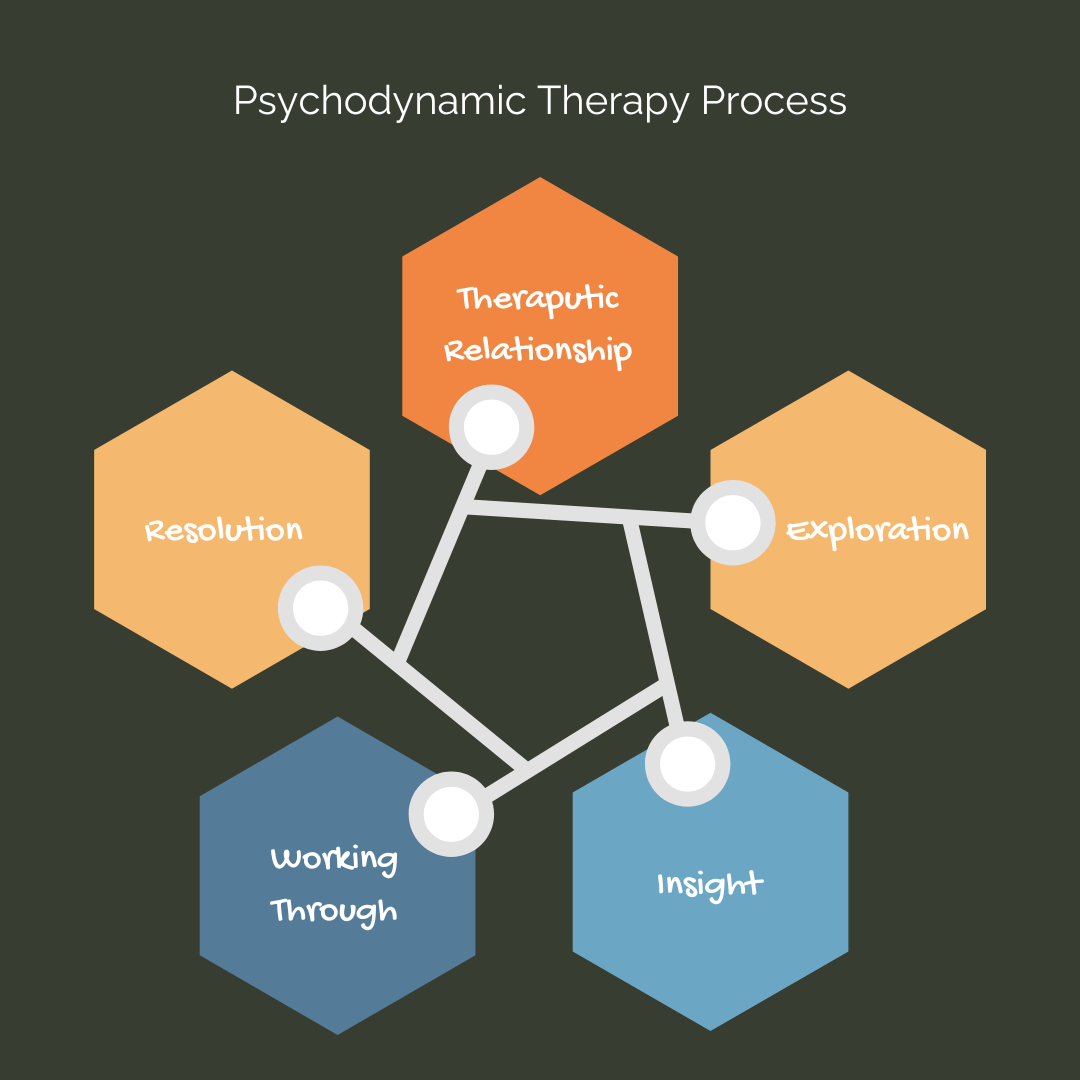
Psychodynamic Therapy Key Concepts
Unconscious processes. A great deal of what we do isn't fully chosen in the moment. It's shaped by what we learned before we had language for it. Psychodynamic therapy brings those processes into view.
Early experiences. How you learned to attach, to express needs, to handle conflict, to be loved, all of it formed early. We trace how those early lessons show up in your current life.
Defense mechanisms. The ways we protect ourselves from painful feelings, like avoidance, intellectualization, perfectionism, were often necessary at one point. The work is recognizing them and asking whether they still serve you.
The therapeutic relationship. What happens between you and your therapist is part of the data. The way you relate, react, or hold back in the room often mirrors the patterns at work everywhere else. That makes the relationship itself a place to learn.
Insight as a vehicle for change. Other approaches focus on changing behavior first and trust feelings will follow. Psychodynamic therapy trusts that real change starts with understanding, and that lasting change requires it.
What changes for people in psychodynamic therapy
The benefits show up over time, in ways that feel structural rather than surface-level:
Deeper self-awareness. You start to recognize the patterns running quietly underneath your choices.
Better relationships. When you understand what you bring to a dynamic, you stop unconsciously repeating it.
Behavioral change that lasts. When you change behavior from the root rather than the surface, it sticks.
Healthier coping. You build new ways of handling difficulty that aren't dependent on old protections.
A sense of agency. Once unconscious patterns become conscious, you have real choice about them for the first time.
Ongoing self-reflection. The skill of looking inward becomes part of how you move through the world.
What psychodynamic therapy works for
This approach is especially helpful when:
You keep finding yourself in similar relationships, conflicts, or roles
You can name what you want but can't seem to act on it
Anxiety, depression, or self-criticism has roots that go further back than the present moment
You've done other kinds of therapy and want to go deeper
You're navigating questions about identity, meaning, or what you actually value
It's also well-suited for people who simply want to understand themselves better. You don't need a clinical reason to do this work. Wanting to know yourself more honestly is enough.
Is psychodynamic therapy right for you?
If you've ever felt that you're not just dealing with a problem but living inside a pattern that's been with you longer than you can explain, psychodynamic therapy may be the kind of work you're looking for. It asks you to slow down and look at what's been shaping you, not to dismantle it, but to understand it. From that understanding, real change becomes possible.
At Insight Counseling Center, psychodynamic therapy is one of the evidence-based approaches we draw from based on what fits your situation. If you're curious about whether it might be right for you, schedule a free 15-minute consultation. We'll talk through what you're working with and figure out where to begin.